Tinubu Admits Economic Gains Yet to Reflect in Food Prices, Purchasing Power
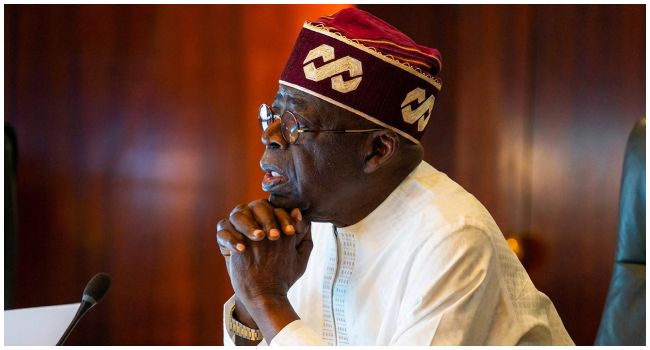
Photo Credit: The Sun Nigeria / Presidency / State House
Tinubu Admits Economic Gains Yet to Reflect in Food Prices, Purchasing Power
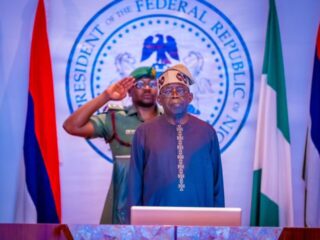
President Bola Ahmed Tinubu has admitted that despite the macroeconomic gains recorded by his administration, Nigerians are yet to feel the impact in terms of cheaper food, jobs, affordable credit and improved purchasing power.
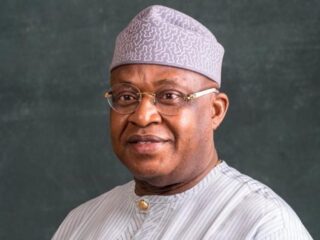
The President, who was represented by the National Chairman of the All Progressives Congress (APC), Prof. Nentawe Goshwe Yilwatda, at the second edition of the Asiwaju Scorecard Series / Asiwaju Policy Roundtable in Abuja on Tuesday, said his government inherited a difficult economy characterized by fuel subsidy distortions, multiple exchange-rate windows, weak revenue and FX shortages.
According to him, the difficult reforms, including fuel subsidy removal and forex market unification, are now yielding results. He cited that Nigeria’s gross external reserves rose to about $52.7 billion by August 2026, while consolidated non-oil revenue increased from N13.63 trillion in 2023 to N16.4 trillion in the first two quarters of 2026.
He added that the country’s trade position improved from a merchandise trade surplus of N44.8 billion in 2023 to N7.54 trillion in Q1 2026, with real GDP growth of 4.43% in Q2 2026 and inflation dropping to about 15.4%.
Tinubu, however, noted that macroeconomic stability is not the destination but the foundation, stressing that the real test is when stability translates into cheaper food, more jobs, affordable credit, reliable electricity and greater purchasing power for Nigerians.
Speaking on his $1 trillion economy target by 2030, the President said the ambition is a national mission to produce more, export more, attract investment and create jobs for young Nigerians.
He unveiled plans for an integrated five-port maritime and logistics corridor linking deep-sea ports in Lagos, Ondo, Ibom, Port Harcourt and Calabar, connected by modern rail and roads, including the Lagos-Calabar Coastal Super Highway.
The plan, he explained, includes a Western Corridor linking Lagos-Abuja-Kaduna-Kano by rail and the Sokoto-Badagry Super Highway, and an Eastern Corridor via Port Harcourt-Abuja-Kaduna-Kano rail and the proposed Calabar-Maiduguri Trans-Sahara Super Highway, to connect Nigeria’s ports to the hinterland and landlocked African markets.
Source: The Sun Nigeria