U.S. to Withdraw 200 Troops from Nigeria After Successful Anti-ISIS Operation
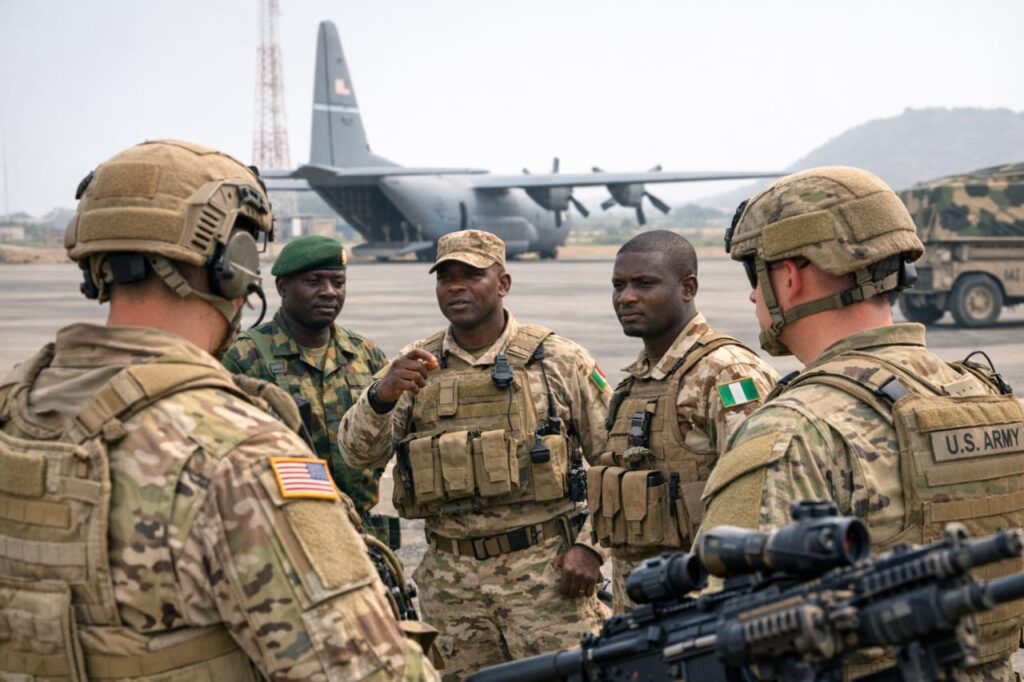
Photo Credit: File Photo / The Sun Nigeria / U.S. Africa Command
U.S. to Withdraw 200 Troops from Nigeria After Successful Anti-ISIS Operation
The United States is set to withdraw about 200 troops deployed to Nigeria for counterterrorism operations, with the full pullout expected by late September.
According to The New York Times, American and Nigerian officials said the relatively small deployment recorded major gains in the fight against Islamist militants. A small team of U.S. trainers and intelligence analysts will remain in the country after the withdrawal.
U.S. officials reportedly see the Nigerian mission as a possible model for future counterterrorism operations in Africa, due to its success combining military assistance, intelligence support, and training.
The withdrawal comes after a major operation in May in the Lake Chad Basin that killed Abu-Bilal al-Minuki, described as the second-in-command of ISIS. U.S. Africa Command (AFRICOM) Commander, Gen. Dagvin Anderson, said last month that many U.S. troops had already been withdrawn after that operation.
Anderson noted that the operation significantly weakened ISIS leadership structure in Nigeria and beyond, adding that Nigeria has been “very active” since then in disrupting the group’s ability to sustain itself.
He stressed that despite the troop reduction, the U.S. will maintain its intelligence partnership with Nigeria, continuing security cooperation through intelligence-sharing and other support.
The development follows the second round of U.S.-Nigeria talks in Washington under a joint working group focused on protecting Christian communities in Nigeria’s Middle Belt. The talks came after President Donald Trump’s designation of Nigeria as a Country of Particular Concern over allegations of Christian genocide — a claim Nigeria has rejected.
Nigeria continues to face a complex security landscape that goes beyond Islamist insurgency, including terrorism linked to the wider Sahel crisis, banditry in the North-West, ISWAP and Boko Haram attacks, farmer-herder clashes, cult violence, and militia activities.
Ladd Serwat, Africa senior analyst at ACLED, described the situation as “a very complicated security situation,” noting that Islamist militant groups “constitute only a small proportion of the overall violence” in Nigeria.
Source: The Sun Nigeria